AI Products36氪
Tech Giants at Home and Abroad Scramble for the Muse Entrance, But the Personal Agent Remains a False Proposition

AI Summary
A month after Meta launched the personal agent Muse, touted as the most captivating product since ChatGPT, ByteDance, Tencent, Alibaba, and Ant Group have rushed out similar offerings. However, Muse's daily net new users fell 62.4% from the September peak, and analysis suggests the model struggles to fit the domestic Chinese market in both product logic and business model.
AI Insights
The rush to build personal AI agents reflects a race to capture the next user-interface layer, but the Muse data suggests the value of agents depends heavily on market structure. In China, super-apps already consolidate most daily tasks, so agent-driven efficiency gains are marginal, while platform permission walls and privacy risks raise the cost of cross-ecosystem operation. Companies that succeed will likely be those embedding agents within existing ecosystems rather than building standalone entry points.
Analysis written by AI from the original article. Check it against the source.
Translated text
Related News

AI Products36氪
Alibaba, ByteDance and Meta Ignite Personal Agent Race: No Table Without a Good Model
In late September, Alibaba announced at its Yunqi Conference that Qwen (Tongyi Qianwen) would accelerate personal agent development, and on October 13 it unveiled 'Qwen Go!', a personal assistant in limited invitation testing. ByteDance (Doubao), Tencent and others have also launched personal agent projects, sparked by Meta's Muse. On the model side, Meta's Muse Wonder and Alibaba's QwenGyre reinforcement-learning framework aim to strengthen long-running agent capabilities.
AI Products36氪
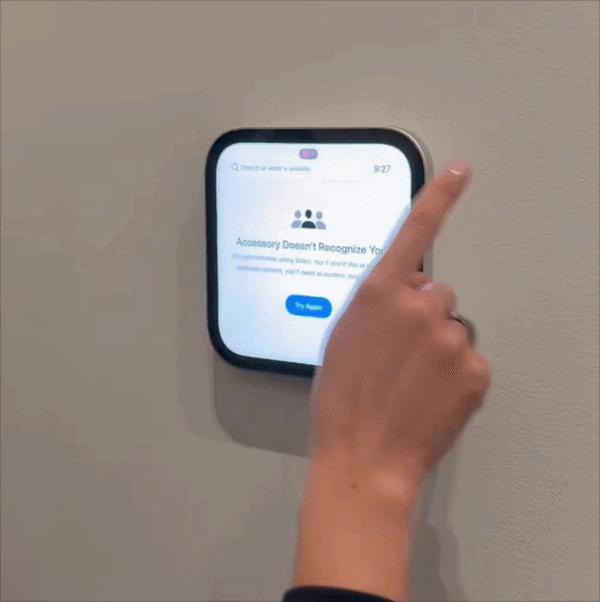
Apple Unveils 12 Home Products at Once, Including HomeView; Siri AI to Control the Whole House
Apple last night unveiled four home product lines: the HomeView smart home hub with a screen, the latest Apple TV 4K, the new HomePod mini 2, and the Home Collection smart home accessories. HomeView and Apple TV 4K both feature Siri AI, and the HomePod mini received its first update in six years. In mainland China, the HomePod mini 2 goes on sale on October 30 for 1,099 yuan.
AI Products36氪
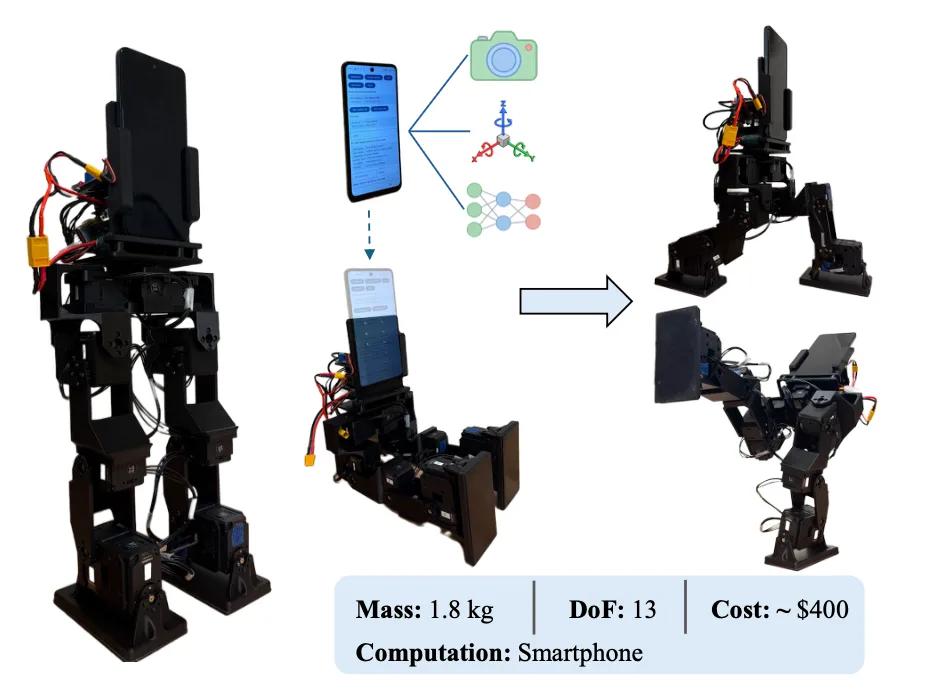
Geeks Build Cabbage-Priced Biped Robot for Under 3,000 Yuan, with Old Phones as Key Contributors
UCLA's RoMeLa lab has developed PhoneBot, a 1.8 kg biped robot with 13 degrees of freedom and a materials cost of about $400 (roughly 2,677 yuan). The robot is powered by a smartphone that serves as its sensor suite, onboard computer, and interface, and by using used older phones, total cost stays under 3,000 yuan.