AI Tech机器之心
Tsinghua Proposes Jev-LDE: Editing ICL Demonstrations Just Once Can Sharply Boost 1-shot Average Accuracy

AI Summary
Tsinghua University researchers propose Local Demonstration Editing (LDE) and a small editing model, Jev-LDE, which performs a single Keep, Delete, or Replace edit on a retrieved demonstration set before the target LLM answers. Across 3 classification datasets and 4 target LLMs, average one-shot accuracy rose from 81.2% to 88.1%, outperforming Semantic TopK initialization in 46 of 48 configurations.
AI Insights
Jev-LDE shows that in-context learning gains can come from a single, well-targeted edit to retrieved demonstrations rather than costly exhaustive subset search, which reduces inference overhead for deployed LLM systems. The approach uses a small 1.7B editor trained with outcome rewards from a frozen target model, suggesting a practical pattern where lightweight models optimize context for larger ones. Companies building RAG and few-shot pipelines should consider post-retrieval refinement as a cost-efficient lever for accuracy.
Analysis written by AI from the original article. Check it against the source.
Translated text
Related News

AI Tech36氪
Anthropic Shocking Study: AI Could Self-Replicate Through TV Boxes
Anthropic's Frontier Red Team published research examining whether AI could replicate, run, and spread across devices autonomously, like a computer virus. The team ran a 26B-parameter model across 15 low-cost Android TV boxes and found that small models can increasingly adapt to unfamiliar hardware. The experiments were conducted in isolated environments, not real-world networks.
AI Tech36氪
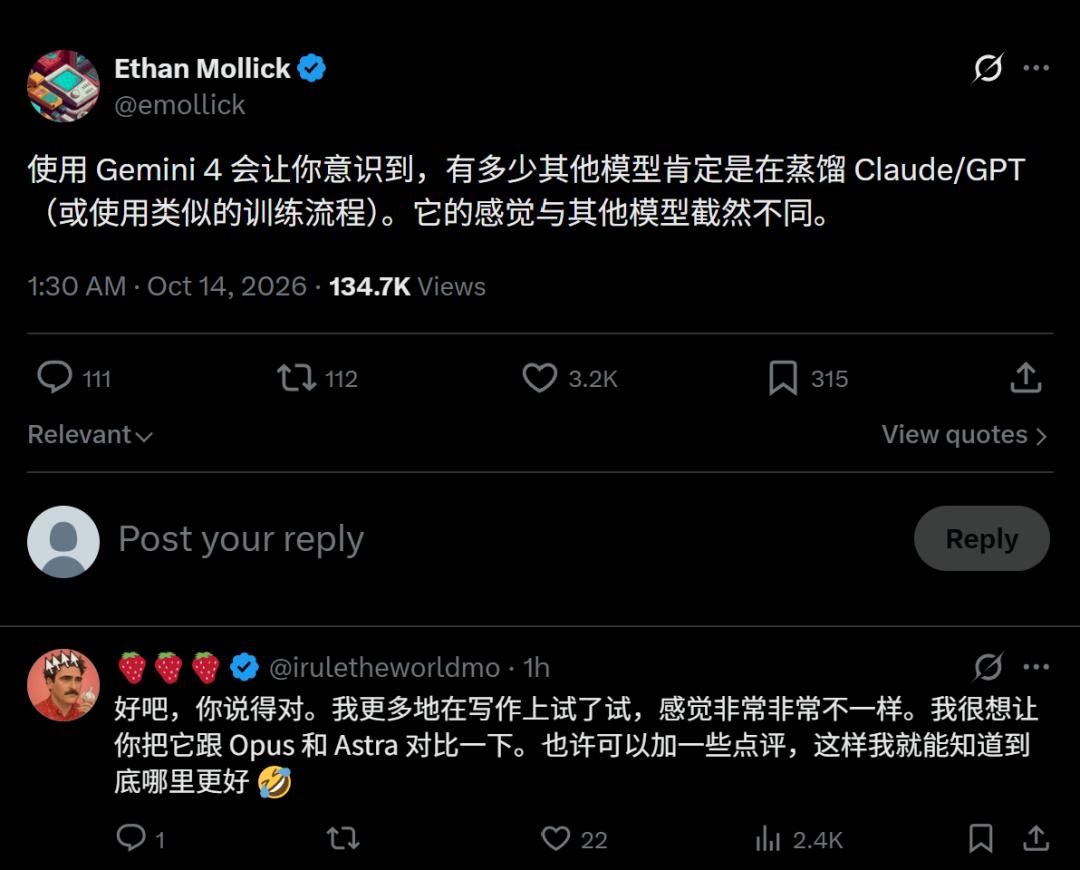
Google Awakens to Physics: Gemini 4 Argon Hands-On Tests Pour In
Google's Gemini 4 Argon has launched and reportedly competes closely with GPT-6 Astra and Claude Opus 5.5 on benchmarks, at about one-fifth the price and several times faster. Hands-on tests showed strengths in 3D generation, physics-intuitive visualization, and scientific reasoning, though its Chinese-language narration sounded awkward.
AI Tech虎嗅
Hands-On Test of Gemini 4 Argon: Google's Stumbling Last-Ditch Effort
Google has made Gemini 4 Argon generally available after first announcing it on October 1 for a security program. Following a year of talent departures and delayed model launches, the model is widely seen as a last-ditch effort for Google. Hands-on testing suggests it will struggle to challenge Claude Opus 5.5 or GPT-6 Astra.